
For generations, Bostonians of every background have shaped the harbor’s edge. Black Bostonians have done so in ways that are both profound and too often overlooked. Their experiences, labor, and pursuit of freedom helped shape the physical, civic, and cultural life of Boston Harbor as we know it.
Long before the Boston Harborwalk became a public path for recreation and reflection, people of color were working these docks, navigating these waters, and shaping the maritime life of this city. Their stories are not peripheral to Boston Harbor. They are central to it.
In Charlestown, near the shipways at the Charlestown Navy Yard, Black sailors served during World War II at a time when the U.S. military remained segregated. They helped power the war effort while fighting for dignity and equal recognition at home. The ships built and launched from that yard carried the labor and resolve of Black servicemen whose contributions strengthened both the harbor and the nation.
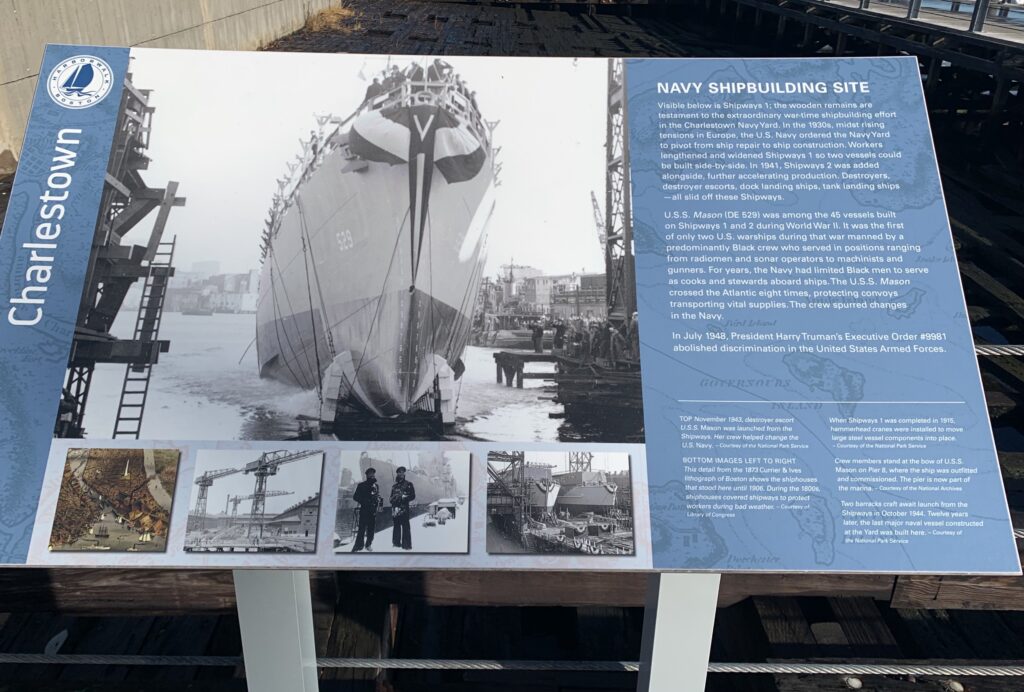
Boston Harborwalk interpretive signage in Charlestown by the Friends of the Boston Harborwalk
Along Fort Point Channel, the water tells another story. Boston’s maritime routes were part of the Underground Railroad. For people escaping slavery, ships and harbor networks offered a path toward freedom. Boston’s waterfront became a threshold between bondage and possibility.
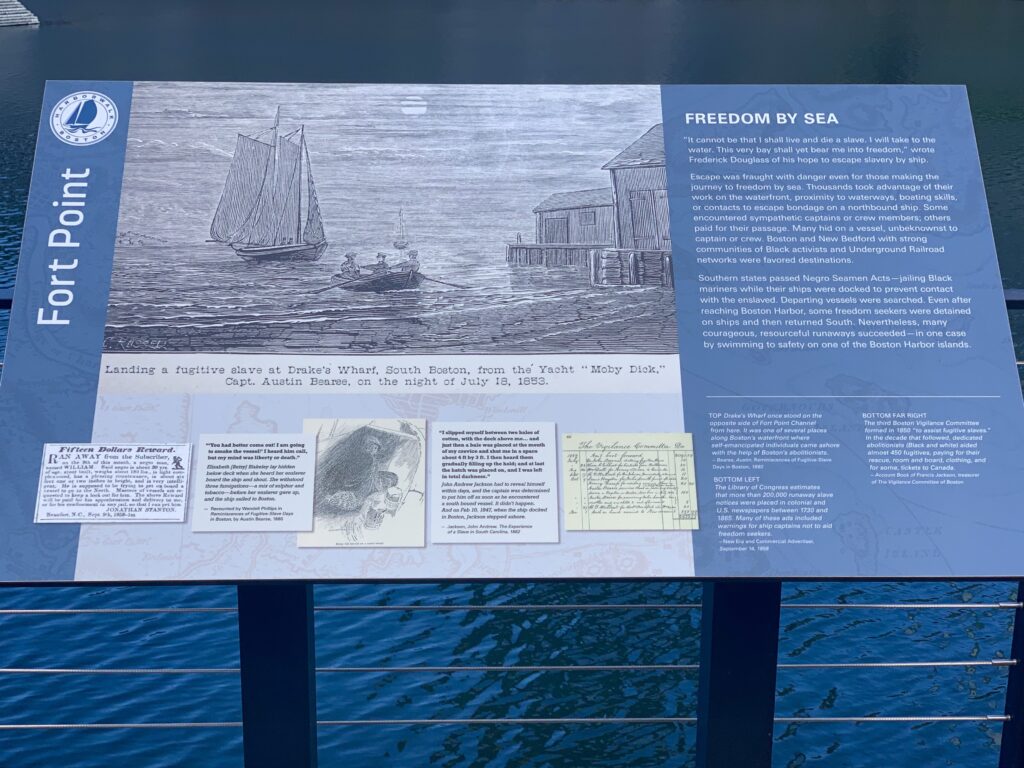
Boston Harborwalk interpretive signage in Fort Point by the Friends of the Boston Harborwalk
A Middle Passage Marker today stands alongside the Long Wharf Harborwalk in the Wharf District, marking where captive Africans disembarked onto Boston’s shores for the first time.
Elsewhere along the waterfront, Black life and work surface again. In South Boston, signage references a Black scientist connected to firefighting innovation. In the Navy Yard, images and records document Black women and men who worked in shipbuilding. Their skill sustained the harbor economy, and their presence shaped the character of the City’s waterfront. And this summer, a new sign honoring Black Mariners will be installed at Columbus Park in the North End, further grounding this history in the landscape itself.
Black History Month gives us a moment to pause and look directly at these stories. But the truth is simpler and deeper. Black history on Boston’s waterfront is not confined to February. It spans centuries and is woven throughout the country’s history.
The Friends of the Boston Harborwalk have helped ensure that these histories are visible through interpretive signs placed where the stories unfolded. Their work helps us remember these stories and the communities that shaped our waterfront. Walking the Boston Harborwalk, you are walking through layers of memory and moving across ground shaped by centuries of labor, resistance, skill, and aspiration.
To learn more about these and other waterfront stories, where to find the signs, and the broader interpretive work along the Boston Harborwalk, visit the Friends of the Boston Harborwalk’s website: http://fbhw.org/.
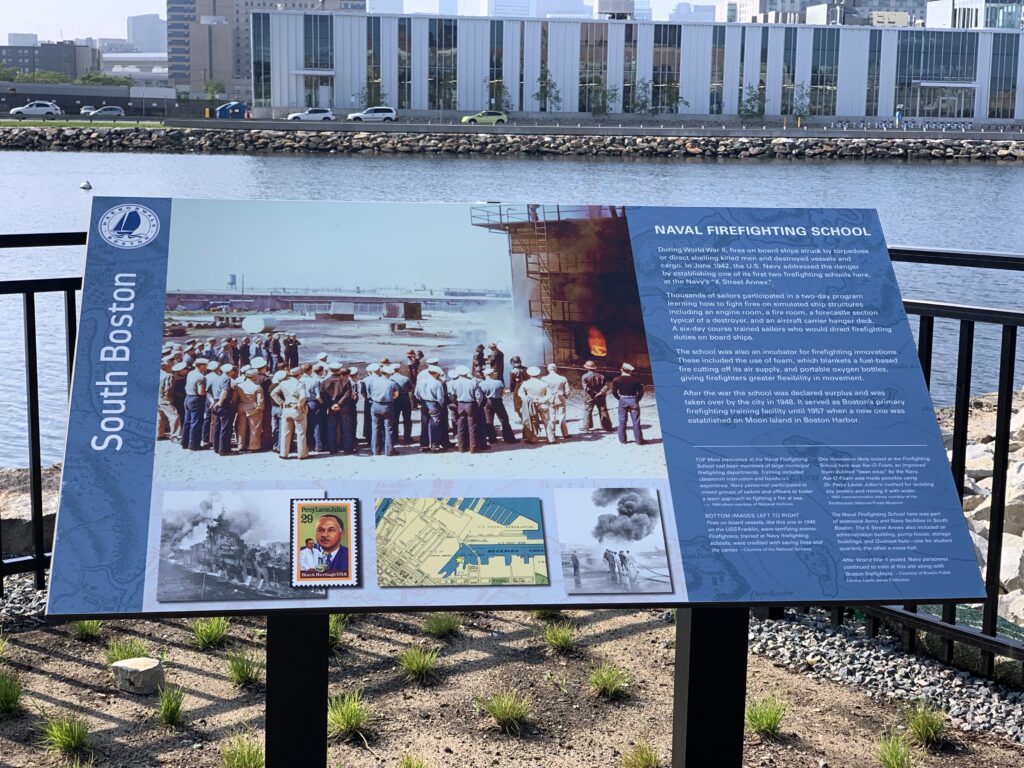
Boston Harborwalk interpretive signage in South Boston waterfront by the Friends of the Boston Harborwalk
Comments