How Boston Harbor Now, CRIW, and partners are turning one day of convening into lasting action
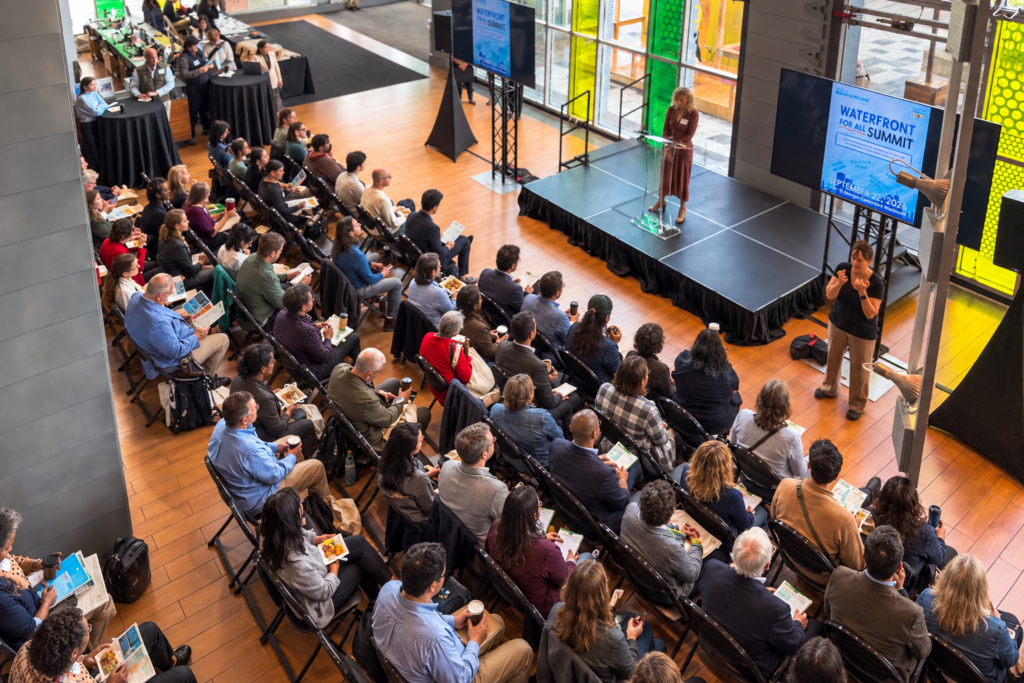
On September 22, Boston Children’s Museum filled with people who don’t often share a room. Residents and researchers. Park commissioners and community organizers. Legislators, artists, funders, and grad students. They spent a day on the Fort Point waterfront asking a simple question with complicated answers: who is Boston’s waterfront really for?
The Waterfront for All Summit was co-hosted by Boston Harbor Now and the Coalition for a Resilient and Inclusive Waterfront (CRIW), a network of more than 60 organizations. We built it to do more than share information. The goal was to put data and lived experience side by side, then turn what we learned into shared next steps.
Data, experience, action
The day moved in three steps.
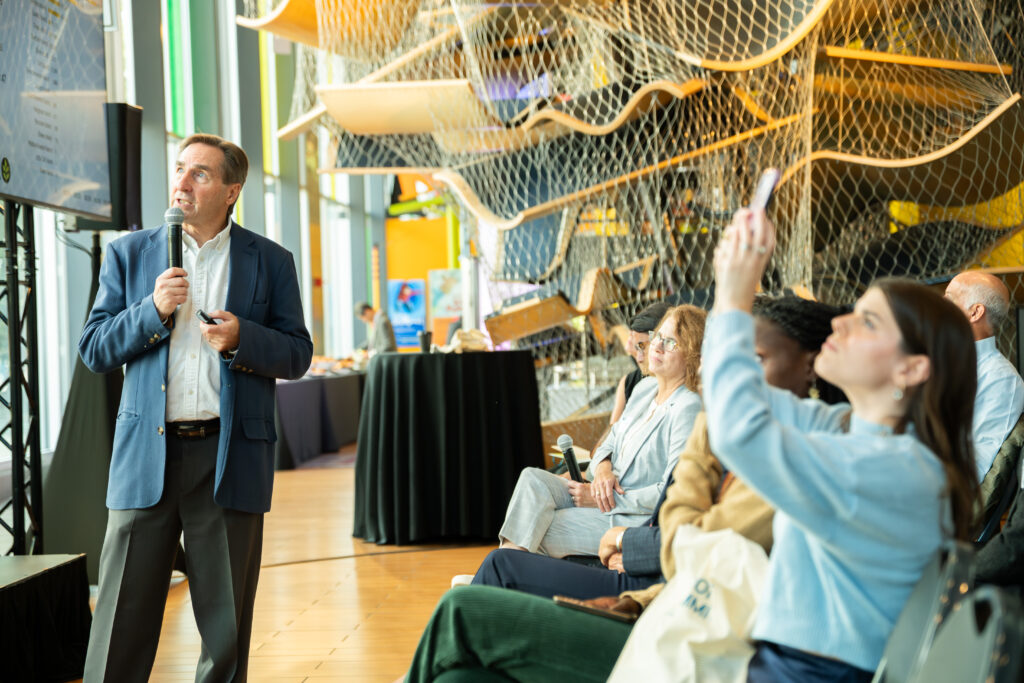
First, the data. Boston Harbor Now shared findings from WaVES, our Waterfront Visitation and Equity Study, a Boston-built model for measuring who reaches the waterfront and who doesn’t. The Massachusetts Department of Conservation and Recreation shared new visitation analysis from its state parks. HoodFit and the Boston Athletic Association explored the road to wellness. The Charles River Conservancy, Mystic River Watershed Association, and Neponset River Watershed Association showed what becomes possible when river groups work together.
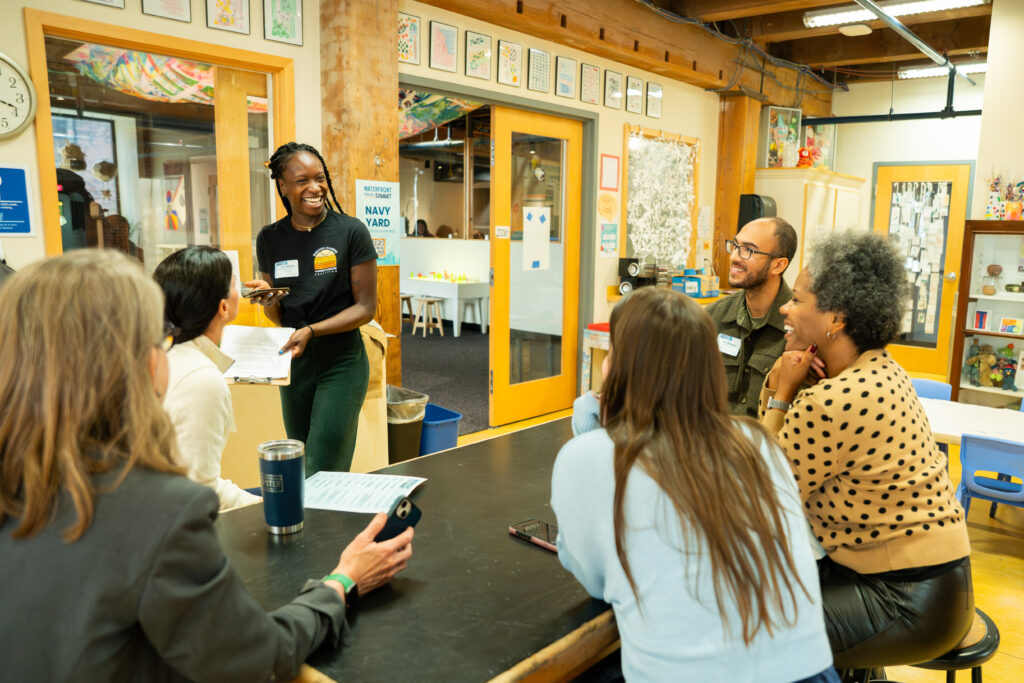
Then, the experience. 119 participants broke into about 20 small-group conversations, led by 21 facilitators from partner organizations and our staff. Each room carried the name of a waterfront place, from Belle Isle Marsh to Carson Beach. Participants answered questions in real time, so their own experiences went on the record right next to the data they had just heard.
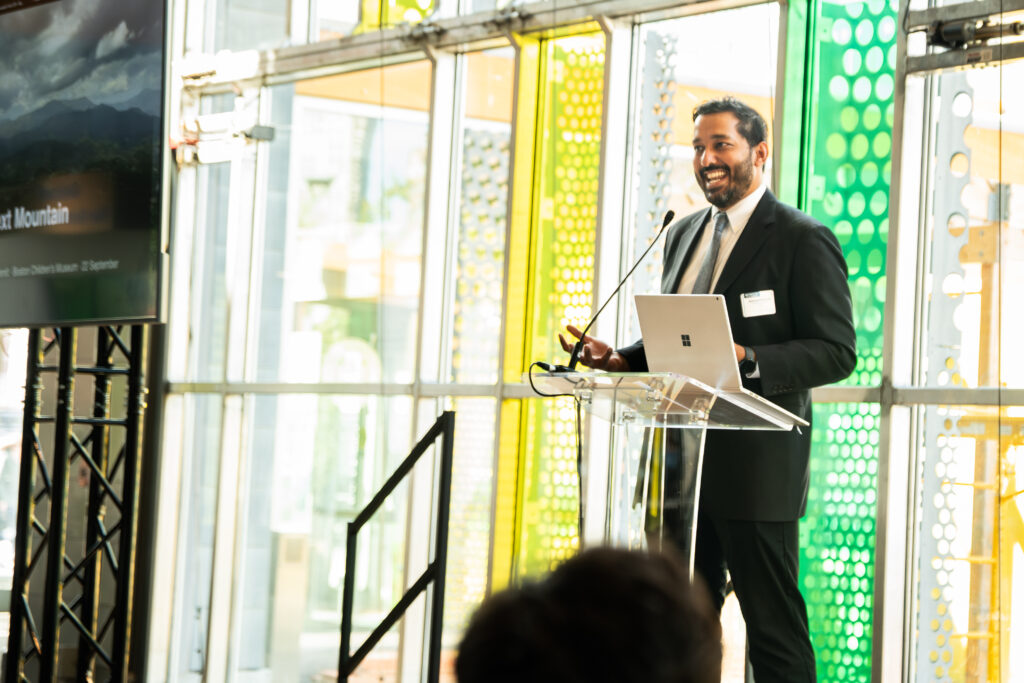
Then, action. CRIW partners led afternoon workshops on strategic communications, legislative advocacy, and health and blue space. City of Boston Parks Commissioner Diana Fernandez Bibeau and DCR Commissioner Nicole LaChapelle joined our President and CEO Kathy Abbott for a parks leadership conversation. Massport’s Jill Valdés Horwood and the Boston Green Ribbon Commission’s Rebecca Herst talked about the human side of collaboration. Epidemiologist Dr. Nishant Kishore delivered the keynote.
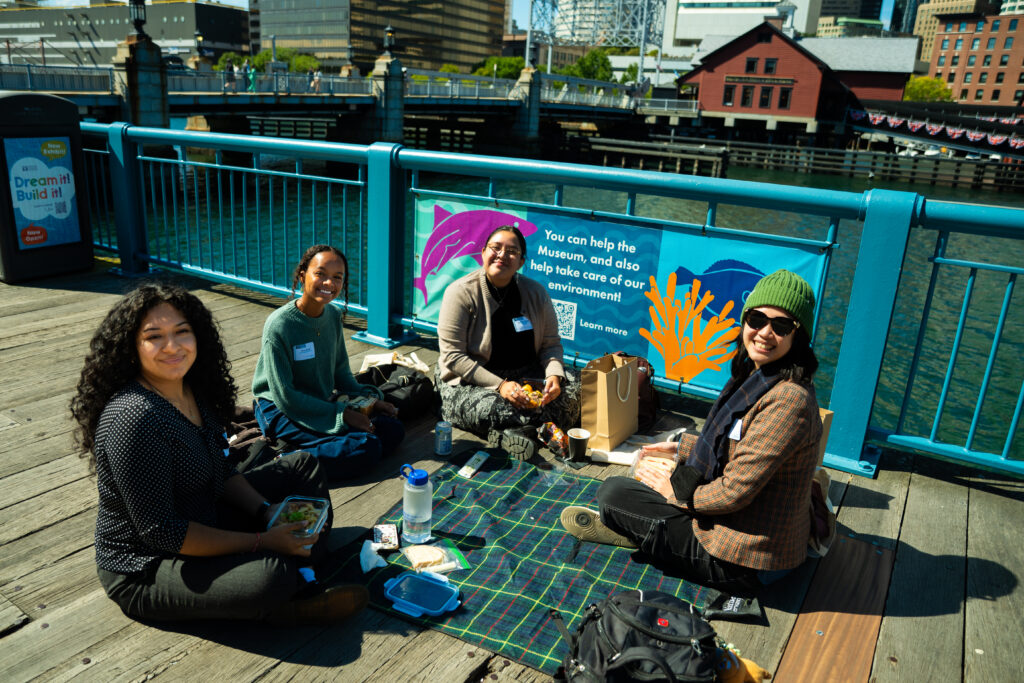
In between, people did what the summit was really about. They ate lunch on picnic blankets along the Harborwalk. They traded stories and contacts. Many stayed well past their own sessions, and the day closed with a sunset cruise on the harbor.
What we heard
The facilitated conversations gave us something rare: a real-time read on how people who use and care about the waterfront actually experience it. Four findings stood out:
- Same waterfront, different welcome. On average, people in the room said they feel welcome on the waterfront. That average hides a gap. 89 percent of white survey respondents agreed that waterfront spaces are intended for people like them. Among respondents of color, 47 percent agreed. 94 percent of white respondents shared that they see people like them using and enjoying the waterfront, compared with 45 percent of participants of color. This was a room of people who chose to spend a day on waterfront equity. When a gap this wide shows up here, it tells us where planning, design, programming, and outreach have the most work to do.
- Open to all isn’t the same as known to all. The lowest-scoring statement of the day was “I can tell which waterfront spaces are public and how to use them.” Only 38 percent agreed. When we asked for one thing that would make the waterfront more welcoming, clearer signage, wayfinding, and maps came up more than anything else, including signs in more languages.
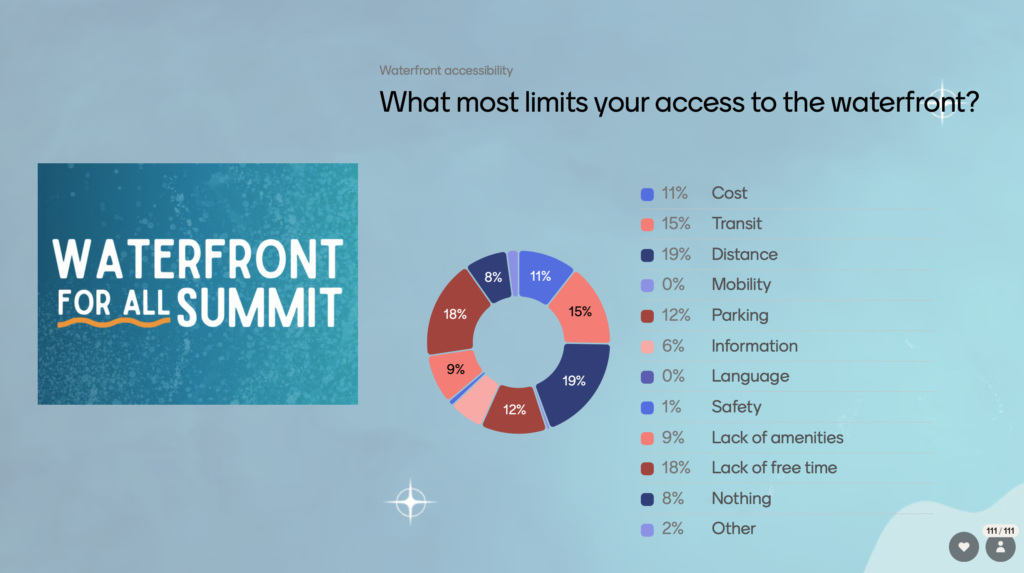
- Getting there is the first hurdle. Distance topped the list of barriers at 46 percent, followed by lack of free time at 42 percent and transit at 35 percent.
- The people who can change things were in the room. Participants ranked city staff first and state agencies second for their power to improve the waterfront experience, followed by nonprofits and community groups. Many of those decision makers spent the day right alongside them at the summit.
These findings echo what WaVES has shown in the data. Now they come with the voices of the people who live them.
Five years of CRIW, and a shared road ahead
The summit also marked a milestone. For five years, CRIW has brought nonprofits, advocates, and community leaders together around a waterfront that is resilient and inclusive. The coalition will complete its run at the end of 2026.
CRIW called the summit “a starting line, not a finish line.” That’s exactly how we see it. Boston Harbor Now is committed to working with CRIW’s partners and coalition members to carry forward together. No single organization owns this. It takes collaboration between public agencies, community groups, nonprofits, philanthropy, and the private sector pulling in the same direction.
“The summit was just the beginning of ensuring that CRIW’s work continues through Boston Harbor Now and all of our fellow harbor organizations, so that everyone can benefit from Boston Harbor,” said Kathy Abbott, President and CEO of Boston Harbor Now.
We’re deeply grateful to Tracey Lewis, Ian Karby, and the whole CRIW network for five years of building the relationships this work depends on, and for partnering with us on this summit.
Why convening matters
Boston Harbor Now plays many roles on the harbor. Convening is one facet of our work that enables and multiplies the rest. WaVES shows where things stand. The summit put lived experience next to that data. What happens next is where the next critical decisions for the future of the waterfront get made.
That’s the role we intend to keep playing: bringing agencies, communities, partners, and funders to the same table, to learn from the same evidence, align on shared goals, and move them forward together. Not one event. An ongoing practice.
What comes next
- Sharing back. This fall, we’ll share a fuller summary of the different data sets, perspectives, and what participants told us with everyone who attended and with our partners.
- Bringing the findings to decision makers. We’re meeting with the agencies, funders, and elected officials who can act on what we heard for the benefit of all.
- Keeping the conversation going. We’re planning follow-up engagements, starting with how to make public waterfront spaces easier to find and use.
Thank you
Thank you to Melissa Higgins and Boston Children’s Museum team for hosting us, and to the Barr Foundation for its support. Thank you to every presenter, panelist, and workshop leader, to the Boston Harbor Women of Color Coalition, and to the 21 facilitators who made room for authentic and meaningful conversation. Photos by Studio Lew, Annielly Camargo, and Srina Lacet.
And thank you to everyone who gave us a Tuesday in September. The waterfront belongs to all of us. Let’s keep building it that way.
Comments